


South Carolina Construction News
Gov. Henry McMaster has released his executive budget for fiscal year 2026-27, proposing more than $1 billion for road and bridge projects while also cutting the state income tax, raising teacher pay and boosting reserves.
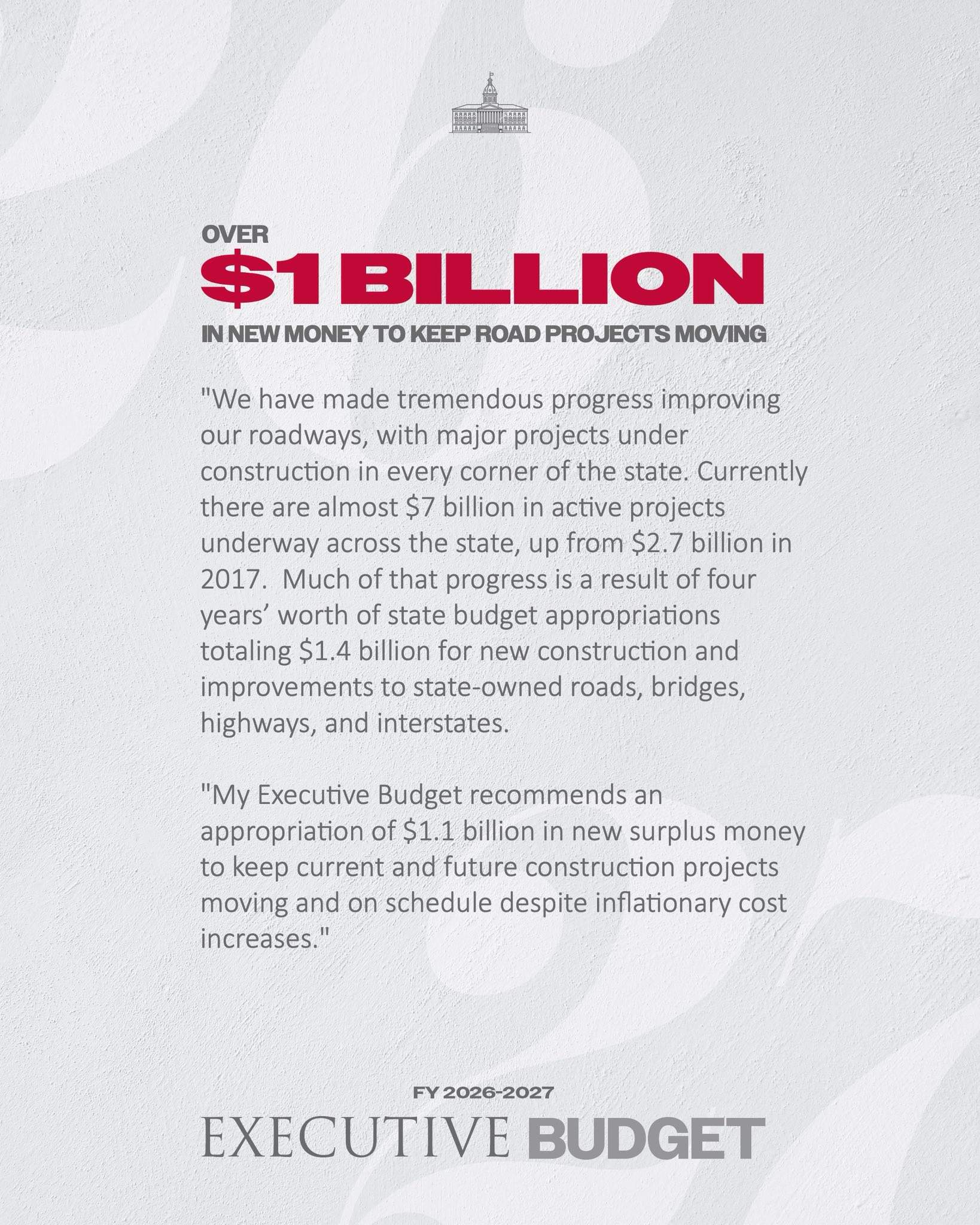
The budget calls for $1.1 billion in surplus funding to keep highway, bridge and interstate projects on schedule as construction and labor costs rise. State officials estimate nearly $7 billion in road projects are currently underway, up from $2.7 billion in 2017.
McMaster said inflation threatens to delay or stall major projects already under construction or preparing to break ground.
“My executive budget recommends an appropriation of $1.1 billion in new surplus money to keep current and future construction projects moving and on schedule despite inflationary cost increases,” McMaster wrote in a letter to the General Assembly.
Beyond transportation, the budget proposes higher teacher pay, expanded full-day four-year-old kindergarten, free breakfast for all public school students and measures to make higher education more affordable. It also continues a gradual reduction of the state income tax and increases deposits into the state’s rainy day fund.
The governor is also recommending a comprehensive population growth study to evaluate whether South Carolina’s infrastructure and essential services can keep pace with rapid growth. South Carolina ranked first nationally for inbound moves last year, according to U-Haul.
The budget includes a proviso directing the Office of Revenue and Fiscal Affairs to issue a request for information to determine the scope and cost of analyzing the impacts of projected population growth over the next 10 and 20 years. Areas to be studied would include transportation, water and sewer systems, electric power, public safety, schools and health care.
“Our state government is in superior fiscal shape,” McMaster wrote, citing investments in infrastructure, education and workforce training as key drivers of economic growth.
The executive budget now moves to the General Assembly, where lawmakers will begin negotiations ahead of final passage later this year.

